West Africa
ECOWAS backs USD 25 Billion Project with New Agreement
The Economic Community of West African States (ECOWAS) has taken a major step toward the implementation of the USD 25 billion Nigeria-Morocco Gas Pipeline, with member states signing an intergovernmental agreement backing the landmark regional energy project.
The agreement was signed on Sunday in Freetown, Sierra Leone, according to a joint statement issued by Morocco’s National Office of Hydrocarbons and Mines and the Nigerian National Petroleum Company, Reuters reports.
The latest agreement marks a significant milestone for one of Africa’s largest cross-border energy infrastructure projects, which is expected to strengthen regional energy security, boost industrial development and expand gas exports to Europe.
The joint statement said the pipeline is designed to transport up to 30 billion cubic metres of natural gas annually from Nigeria through 13 West African countries to Morocco.
The statement added that the next milestone will be the signing of an agreement between Morocco and Mauritania in the presence of Nigeria’s President, further advancing the project’s implementation.
The Nigeria-Morocco Gas Pipeline is one of Africa’s most ambitious energy infrastructure projects, aimed at connecting Nigerian gas reserves to West African countries, Morocco and ultimately Europe.
Source: Nairametrics
East Africa
Tanzania and Uganda Join Forces to Build East Africa’s Next Energy Hub in a Move that Could Reshape Regional Fuel Trade
East Africa is taking another step towards becoming one of Africa’s fastest-growing energy corridors.
Tanzania and Uganda have signed a new agreement with global energy trader Vitol Bahrain to develop the Tanzanian port city of Tanga into a regional energy hub, deepening a partnership that could reshape fuel trade, investment and energy security across East Africa.
The Memorandum of Understanding was signed in Dar es Salaam in the presence of Tanzanian President Samia Suluhu Hassan and Ugandan President Yoweri Museveni during the Ugandan leader’s two-day working visit.
President Samia described the project as part of a broader strategy to add value to the region’s natural resources while strengthening economic cooperation between the neighbouring countries.
Museveni said the agreement between the Uganda National Oil Company (UNOC), the Tanzania Petroleum Development Corporation (TPDC) and Vitol Bahrain E.C. marked another milestone in the long-standing partnership between the two countries.
The announcement comes as East Africa prepares for one of the most significant changes in its energy landscape.
The proposed hub is expected to support petroleum storage, blending, logistics, marine services and fuel trading, allowing East African countries to retain more value from their oil resources instead of relying heavily on imported refined products and foreign trading centres.
Source: Business Insider Africa
Ethiopia
Ethiopia Targets USD 13.4 Billion in Exports for 2026/27 Fiscal Year
Ethiopia has set an ambitious target of generating USD 13.4 billion in export revenue during the Ethiopian fiscal year 2026/27.
The target signals Ethiopia’s determination to accelerate export-led growth by expanding value-added exports, broadening global market access, and increasing foreign exchange earnings.
A high-level consultation with exporters, where government officials and business leaders reviewed the country’s export performance in the previous fiscal year and agreed on priorities to accelerate export growth.
Ethiopia generated more than USD 11.2 billion in export earnings during the 2018 Ethiopian fiscal year (2025/26), a performance that Minister of Trade and Regional Integration Kassahun Gofe said provides a strong foundation for achieving the country’s new export target.
The goal would help achieve the USD 13.4 billion target and expand the country’s foreign currency earnings, the minister noted.
The export revenue target forms part of Ethiopia’s broader economic reform agenda, which seeks to expand manufacturing and agro-processing exports, improve external trade competitiveness, and strengthen the country’s position in regional and global markets.
Source: Ethiopian News Agency
Niger
Niger Plans West Africa’s Third-Largest Refinery with USD 1.9 Billion Project as it Targets Regional Energy Hub Status
Niger has signed a USD 1.9 billion agreement to develop a 100,000-barrel-per-day refinery and petrochemical complex in Dosso, advancing the landlocked West African country’s ambition to process more of its crude domestically and become a regional energy hub.
The agreement, signed on August 15 between Niger and Zimar Group and its partner High Tech, covers the design, financing, construction, operation and eventual transfer of the refinery to the Nigerien government under a build-operate-transfer structure.
The project is expected to take three years to construct and will operate for 13 years before being transferred to the state.
At 100,000 barrels per day, the planned facility would rank among West Africa’s largest refining projects by capacity once fully operational, behind the 700,000-bpd Dangote Refinery in Nigeria and Ghana’s 120,000-bpd Sentuo Oil Refinery.
Source: Business Insider Africa
Morocco
Morocco to Invest USD 1.5 Billion in Africa’s Second Large-Scale Waste-to-Energy Plant
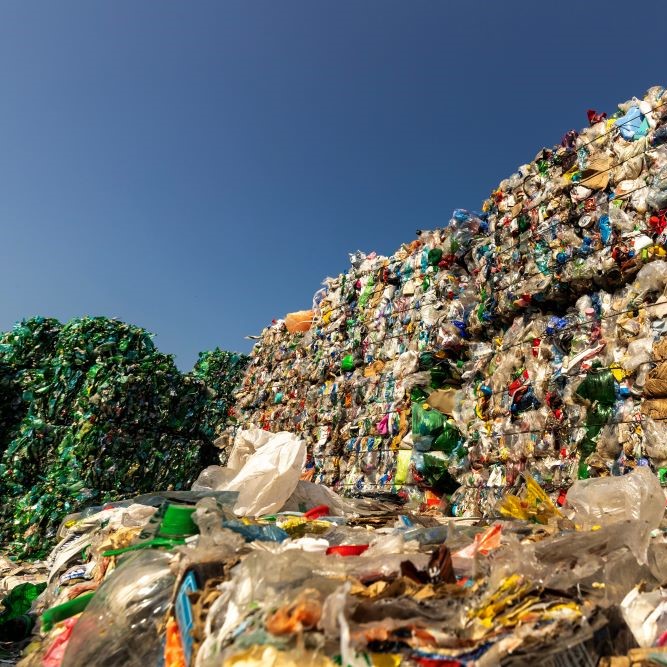
Morocco is set to build Africa’s second large-scale waste-to-energy plant, a USD 1.5 billion project designed to turn millions of tons of household waste into electricity while tackling one of the country’s biggest landfill pollution problems.
Morocco is set to build Africa’s second large-scale waste-to-energy plant, a USD 1.5 billion project designed to turn millions of tons of household waste into electricity while tackling one of the country’s biggest landfill pollution problems.
A consortium led by Swiss-Japanese waste management company Kanadevia Inova said construction of the facility in Casablanca is expected to begin by the end of 2026, with full commercial operations targeted for mid-2030.
Per a Reuters report, the project is being developed in partnership with Moroccan energy firm Nareva and Japanese trading company Itochu under a concession awarded by Casablanca’s city government.
The project is expected to transform the Mediouna landfill, Morocco’s largest dumpsite, which has long been associated with foul odours, polluted farmland and methane emissions from decomposing waste.
According to Kanadevia Inova, the plant could cut greenhouse gas emissions by about 20% of Switzerland’s annual emissions, a reduction the company says is comparable to removing 300,000 cars from the road.
Source: Business Insider Africa
Nigeria
Nigeria’s USD 3.2 Billion Customs Overhaul becomes Model for USD 3.1 Billion AfCFTA Project across Africa
Nigeria’s multibillion-dollar customs modernisation programme is being exported as a model for a much larger attempt to digitise and connect customs systems across Africa, giving a Nigerian company a potentially significant role in the infrastructure underpinning the continent’s free-trade ambitions.
The Infrastructure Concession Regulatory Commission (ICRC) recently said that Nigeria’s Customs Modernisation Project provided the model for the African Continental Free Trade Area’s planned USD 3.1 billion customs modernisation programme.
The development follows an agreement reached in July between the AfCFTA Secretariat and Bergmans Security Consultants and Supplies Limited, the Nigerian company behind the consortium implementing Nigeria’s customs modernisation programme.
Under the arrangement, Bergmans is expected to help develop digital and physical infrastructure capable of connecting customs administrations across participating African countries.
The project is potentially significant for the AfCFTA, which is attempting to turn a continent fragmented by different customs procedures, border systems and regulatory requirements into a more integrated trading market.
AfCFTA Secretary-General Wamkele Mene said when the partnership was announced that the Secretariat had observed Nigeria’s experience with customs digitisation before deciding to use the model more broadly.
Source: Business Insider Africa
South Africa
South Africa Wins Chinese Backing for USD 122 Billion Energy Expansion to Rebuild Manufacturing Sector
South Africa has secured Chinese backing for an ambitious ZAR 2.2 trillion (approx. USD 122 billion) energy investment programme as Africa’s most industrialised economy steps up efforts to rebuild its manufacturing base after years of electricity shortages that hampered economic growth.
Electricity and Energy Minister Kgosientsho Ramokgopa unveiled the investment drive during a visit to China, where he sought financing, technology and industrial partnerships to accelerate South Africa’s energy transition while expanding domestic manufacturing capacity.
Chinese officials expressed support for the country’s power expansion plans, according to Bloomberg.
Rather than seeking capital alone, Pretoria is encouraging Chinese companies to establish manufacturing operations in South Africa to produce critical energy equipment including transformers, batteries, solar components, cables and other grid infrastructure.
The government says local production would reduce import dependence, strengthen industrial capacity and create jobs while supporting one of the continent’s largest electricity expansion programmes.
The investment pipeline covers about 105 gigawatts of new electricity generation alongside a major expansion of transmission infrastructure through 2039, including roughly 14,500 kilometres of new power lines designed to connect renewable energy projects and growing industrial demand.
Source: Business Insider Africa
Zambia
BHP’s Copper Earnings Hit USD 18.2 Billion and Overtake Iron Ore as Zambia Returns to Mining Giant’s Radar
Copper has overtaken iron ore as BHP’s biggest earnings contributor for the first full financial year, strengthening the commercial case behind the mining giant’s renewed exploration interest in Zambia.
BHP reported USD 18.19 billion in underlying earnings before interest, tax, depreciation and amortisation from copper during the year ended 30 June 2026.
That placed copper ahead of iron ore, which generated approximately USD 14.5 billion, marking an important shift for a company whose profits have historically been dominated by Western Australia’s vast iron ore operations.
Copper contributed 54 percent of BHP’s USD 32.9 billion in group underlying EBITDA, compared with 45 percent in the previous financial year.
The results show that copper has moved beyond being a long-term growth plan for BHP and become its most important current earnings engine.
BHP’s underlying attributable profit rose 30 per cent to USD 13.2 billion, while its statutory profit increased 9 percent to USD 9.8 billion. The two measures differ because underlying profit removes exceptional and non-operating items.
Revenue increased 15 percent to USD 58.8 billion. The company declared a final dividend of 99 US cents per share, bringing its full-year dividend to USD 1.72 per share, the highest in four years.
Source: Business Insider Africa
_______________________
Reports
Africa in the World 2043 | African Futures with AUDA-NEPAD
This theme examines how four global scenarios, a Sustainable World, a Divided World, a World at War and a Growth World, could shape Africa’s relations with China, the EU, the US, India, the Gulf states and Türkiye. It also examines the potential power and influence of key African countries within the continent. Developed in the Global Power Shifts theme, the four scenarios are also applied in the Migration theme (forthcoming).
This theme examines how four alternative global futures, a Sustainable World, Growth World, Divided World and World at War, could reshape Africa’s development prospects, external relationships and geopolitical influence in 2050.
A Sustainable World combines renewed multilateral cooperation with stronger African integration, governance, human development and environmental action. A Growth World prioritises open markets, investment and technological expansion, but delivers weaker redistribution, greater inequality and limited climate action. A Divided World is shaped by nationalism, protectionism and competing blocs, weakening international cooperation, trade and development. A World at War sees geopolitical rivalry escalate into widespread conflict, militarisation and authoritarianism, severely constraining Africa’s development.
Click here to download and read the report.
Powering Climate Resilience in Francophone West Africa | International Renewable Energy Agency
Francophone West Africa faces a dual challenge of rising climate risks and persistent gaps in electricity access and service quality. As climate hazards intensify, the ability of essential services such as healthcare, water supply and food systems to function reliably becomes increasingly critical to resilience.
This report examines the role of decentralised renewable energy (DRE) in supporting climate adaptation, moving beyond traditional access metrics to assess whether electricity systems deliver sufficient capacity, availability and reliability to sustain key services under climate stress. Using the Multi-Tier Framework for energy access, the analysis links electricity service levels to real-world adaptation outcomes.
The findings highlight a critical gap between system deployment and service delivery, and propose practical actions to align planning, financing, and monitoring with resilience objectives. By shifting focus from connections to service performance, the report outlines a pathway to strengthen climate resilience across vulnerable communities in the region.
Click here to download and read the report.
Raising FDI for African Manufacturing: An Assessment of Manufacturing Africa’s Additionality | ODI Global
This independent study assesses the impact and additionality of Manufacturing Africa (MA), examining how MA’s ‘Bigger, Better, Faster’ Additionality Framework ensures that Foreign, Commonwealth and Development Office (FCDO) funding delivers outcomes beyond what the market would achieve alone.
Since 2019, MA has supported 266 firms, helped mobilise nearly GBP 2.2 billion in Foreign Direct Investment (FDI), and contributed to approximately 150,000 jobs, with a deal closure rate exceeding 30%. Using quantitative analysis, benchmarking and in‑depth interviews, the report finds that MA accelerates transactions, strengthens investor confidence, enhances ESG and governance standards, and improves firms’ strategic and operational fundamentals.
The findings show that MA’s impact extends beyond individual deals – contributing to structural transformation and diversification across African economies. The report also proposes an expanded additionality framework to better capture firm‑level change, investment‑level impact and inclusive, sustainable industrialisation.
Click here to download and read the report.
Navigating Rules of Origin Across Free Trade Areas: The Case of AfCFTA and Regional Economic Communities| United Nations Development Programme
The African Continental Free Trade Area (AfCFTA) represents a historic opportunity to accelerate economic integration, boost intra-African trade and drive sustainable development across the continent. By creating a single market for goods and services, the AfCFTA has the potential to lift millions of African citizens out of poverty, foster industrialisation, and strengthen Africa’s positioning as a key player in the global economy. However, the benefits of the AfCFTA can only be realised when businesses can easily navigate the complex trade rules that govern preferential market access. Among these, rules of origin stand as one of the most critical yet often misunderstood components.
This publication provides a practical guide to navigating rules of origin under Africa’s preferential trade regimes. Focusing on the AfCFTA, the East African Community, the ECOWAS Trade Liberalisation Scheme and the Southern African Development Community, it helps businesses assess whether products qualify for preferential tariffs and identify the most commercially viable trade regime. Sector-based scenarios covering fisheries, cocoa, cosmetics, apparel and motor vehicles translate complex requirements into practical guidance for exporters, policymakers and trade practitioners.