Africa
China Tops Africa’s Biggest New Investment Projects with Nearly USD 4.7 Billion in 2025
China emerged as the largest source of investment behind Africa’s biggest new foreign-backed projects in 2025, committing nearly USD 4.7 billion across three of the continent’s 10 largest announced greenfield developments, according to the United Nations Conference on Trade and Development (UNCTAD) World Investment Report 2026.
The investments span critical minerals, energy and industrial production, reinforcing Beijing’s position as one of Africa’s most influential economic partners at a time when global powers are intensifying competition for the continent’s strategic resources and manufacturing potential.
UNCTAD’s annual report shows that while the total value of announced greenfield investments in Africa declined by nearly one-third in 2025, the number of projects increased, indicating that investors shifted away from a handful of mega-projects toward a broader mix of new developments.
China’s dominance among those projects came through three major investments worth a combined USD 4.7 billion.
The largest Chinese-backed project was a USD 2.5 billion oil and gas investment in Ethiopia by Golden Concord Holdings, a Hong Kong-based industrial group.
It was followed by Fujian Xiang Xin Group’s USD 1.1 billion oil and gas project in Zambia and CMOC Group’s USD 1.1 billion metals investment in the Democratic Republic of Congo.
Together, the projects made China the largest investing economy represented among Africa’s biggest new foreign-backed developments announced during the year.
Source: This Day
West Africa
ECOWAS Bank Plans to Double Assets to USD 4.4 Billion to Help Close West Africa’s USD 36 Billion Infrastructure Financing Gap
The ECOWAS Bank for Investment and Development (EBID) plans to double its balance sheet to USD 4.4 billion over the next five years as it seeks to narrow West Africa’s estimated USD 36 billion annual infrastructure financing gap.
MacDonald Saye Goanue, coordinator of the bank’s vice presidency operations, said the Lomé, Togo-based lender aims to grow its balance sheet from about USD 2.2 billion by attracting new investors and strengthening its capital base.
A major step toward that goal came with the African Development Bank’s (AfDB) USD 100 million capital injection, which EBID believes will strengthen its credit profile, lower funding costs, and attract additional investors, according to Bloomberg.
Last year, EBID financed 15 projects worth USD 817 million, covering sectors such as transport, energy, agriculture, and industry. Under its new five-year strategy, 63% of new financing commitments will be directed toward the private sector, reflecting a growing emphasis on mobilising private capital to address Africa’s infrastructure deficit.
Source: Business Insider Africa
Africa/ GCC
Gulf States Advance 7 Pipeline Projects to Bypass Strait of Hormuz, Reshaping Africa’s Red Sea Trade Route
Before the Iran war, around 15 million barrels of Persian Gulf oil passed through the Strait of Hormuz every day, making the narrow waterway one of the world’s most critical energy chokepoints.
Now, Gulf oil producers are accelerating plans to reduce their dependence on the route, a shift that could place Africa’s Red Sea coastline, touching countries like Egypt, Sudan, Eritrea, and Djibouti, at the heart of a new global energy map.
Governments and energy companies across the Gulf are pursuing at least seven major pipeline projects that are either under construction, in advanced planning or under discussion.
The projects are designed to reroute crude oil to export terminals on the Red Sea, Gulf of Oman and the Mediterranean, bypassing the Strait of Hormuz, where tensions with Iran have repeatedly disrupted shipping.
The planned infrastructure could significantly increase the strategic importance of the Red Sea, placing African countries bordering the waterway along an increasingly vital global energy corridor.
According to Goldman Sachs, the combined projects could add 3.8 million barrels per day of bypass capacity by the end of 2027, rising to 7.3 million barrels per day by the end of 2028. If completed, as much as 60% of the Gulf’s pre-war oil exports, around 23 million barrels a day, could avoid the Strait of Hormuz altogether.
The investment drive follows months of disruption linked to the Iran conflict, which has kept pressure on the Strait of Hormuz and pushed Brent crude above USD 100 per barrel. Gulf producers increasingly view dependence on a maritime chokepoint along Iran’s coastline as an unacceptable long-term risk.
Source: Business Insider Africa
Burkina Faso
Burkina Faso Records Over USD 6 Billion Worth of Gold through Official Channels in 6 Months
Burkina Faso has recorded more than USD 6 billion worth of gold through official channels in the first half of 2026, as the military-led government deepens efforts to formalise artisanal mining and tighten state oversight of one of Africa’s largest gold industries.
The update was disclosed during the mid-year evaluation of Energy, Mines and Quarries Minister Yacouba Zabré Gouba’s 2026 performance contract, where the ministry reported an overall execution rate of 61.7% as of June 30.
According to the government, 26 tonnes of fine gold were produced by the country’s industrial mines during the first six months of the year. At the same time, the National Precious Substances Company (SONASP) procured approximately 29 tonnes of gold from artisanal and semi-mechanised miners, against a full-year target of 45 tonnes.
The national development strategy relies heavily on large-scale infrastructure investments and continuous reforms aimed at making the domestic business environment highly attractive to international capital.
The newly secured capital is expected to target critical structural areas designed to sustain long-term economic momentum and lift domestic industrial capacity.
Major international institutions and global lenders participated in the roundtable, signalling deep confidence in the macroeconomic stability and reform path of the West African nation.
Infrastructure is still a top priority, but local energy is becoming a major target for both public and private investment.
The government plans to utilise a portion of these development commitments to improve energy security and build reliable domestic grids capable of supporting industrial growth.
Source: Business Insider Africa
Côte d’Ivoire
World’s Top Cocoa Producer Clinches USD 80 Billion in Development Pledges
Côte d’Ivoire has secured more than USD 80 billion in funding commitments during a major donors roundtable held in Abidjan on July 8 and 9 to accelerate its national economic development.
The final pledge total significantly exceeded the initial targets set by the government, reinforcing the country’s status as one of the fastest-growing economies in West Africa.
This major influx of capital will support the ongoing economic expansion of the country, which has sustained an average annual growth rate of 6.5 percent since recovering from its post-election crisis in 2011.
The national development strategy relies heavily on large-scale infrastructure investments and continuous reforms aimed at making the domestic business environment highly attractive to international capital.
The newly secured capital is expected to target critical structural areas designed to sustain long-term economic momentum and lift domestic industrial capacity.
Major international institutions and global lenders participated in the roundtable, signalling deep confidence in the macroeconomic stability and reform path of the West African nation.
Infrastructure is still a top priority, but local energy is becoming a major target for both public and private investment.
The government plans to utilise a portion of these development commitments to improve energy security and build reliable domestic grids capable of supporting industrial growth.
Source: Business Insider Africa
Egypt
Egypt Signs MoU to Establish First Wind Turbine Factory, 2 GW Wind Farm in Gulf of Suez
Egyptian Prime Minister Mostafa Madbouly witnessed the signing of a memorandum of understanding (MoU) to establish Egypt’s first wind turbine manufacturing plant and develop a 2-gigawatt (GW) wind power project in the Gulf of Suez, marking a significant step towards localising renewable energy technologies and expanding the country’s clean energy capacity.
The signing ceremony took place at the Cabinet headquarters in the New Administrative Capital in the presence of Minister of Electricity and Renewable Energy Mahmoud Esmat.
The agreement aligns with Egypt’s strategy to support local industry, increase the domestic component in renewable energy projects, and localise advanced solar and wind energy technologies.
It also aims to expand the manufacturing of electrical equipment and facilitate the implementation of renewable energy projects in Egyptian pounds, while leveraging Egypt’s trade agreements to export locally manufactured products to markets across Africa and the Middle East.
The MoU was signed between China’s SANY Renewable Energy, a global leader in wind turbine manufacturing technology, and Egypt’s Egyptian Electricity Transmission Company and New and Renewable Energy Authority.
Under the agreement, Egypt will establish its first wind turbine manufacturing facility to supply equipment and components for domestic wind energy projects, while exporting surplus production to regional markets.
Source: Daily News Egypt
Ethiopia
Ethiopia Records Historic USD 10.7 Billion Export Revenue, Exceeds Target by 14%
Ethiopia has recorded a historic export performance, generating over 10.7 billion U.S. dollars in revenue and achieving 114 percent of its annual target, the Ministry of Trade and Regional Integration announced.
The performance was presented during a review forum assessing the 2018 Ethiopian fiscal year results of the Ministry and its accountable institutions.
More than 3.4 million online business registration and licensing services were delivered during the fiscal year, achieving over 100 percent performance. In addition, more than 2.9 million post-licensing inspections were conducted.
The Ministry also expanded market infrastructure through the establishment of 804 new Sunday market centres, bringing the total number to 2,369 nationwide, strengthening direct links between producers and consumers.
A total of 31 modern market centres were constructed during the fiscal year, while construction of 10 livestock market centres was launched. Two of them have been completed and opened for public service.
The Minister highlighted improvements in product quality control and the expansion of e-commerce initiatives as part of broader trade modernisation efforts.
He said the achievements will serve as a strong foundation for advancing Ethiopia’s ongoing economic transformation agenda and sustaining reform momentum in the trade sector.
Source: Fanamc
South Africa
South Africa’s Newest Private Credit Fund Plans to Unlock USD 21 Billion for Small Businesses
South Africa’s newly launched private credit fund has been listed on the Cape Town Stock Exchange to unlock USD 21 billion in capital for underserved small and medium-sized enterprises across the country.
This financial initiative aims to address the persistent funding challenges faced by local businesses that struggle to secure traditional bank loans due to strict lending criteria and regulatory hurdles.
By providing alternative debt solutions, the fund seeks to stimulate economic growth and job creation in key sectors of the South African economy.
The successful listing of this private credit fund is expected to pave the way for similar alternative investment vehicles to enter the South African public markets.
This structural shift in the local financial ecosystem highlights the growing maturity of the continent’s private debt market as a key driver of corporate funding.
Source: Business Insider Africa
________________________
Reports
African Trade Report 2026: Leveraging Geopolitics for Trade and Industrialisation in Global Africa| Afreximbank
The 2026 African Trade Report, themed “Leveraging Geopolitics for Trade and Industrialisation in Global Africa,” is published at a pivotal moment for Africa and the global economy. Across the world, shifting geopolitical dynamics, evolving supply chains, technological transformation, and changing patterns of trade and investment are redefining the international economic landscape. For Africa, these changes present not only challenges, but also a historic opportunity to reposition the continent as a dynamic centre of production, trade, innovation, and growth.
The findings of this report highlight the growing resilience and potential of African economies. Africa’s real GDP growth accelerated from 3.4 percent in 2024 to 4.5 percent in 2025, outpacing global growth and reaffirming the strength and adaptability of the continent. While aggregate inflation moderated significantly from 21.6 percent to 13.1 percent – with some countries recording as low as 3 percent inflation rate, merchandise trade expanded by 6.1 percent to approximately USD 1.5 trillion, and intra- African trade grew by 5.5 percent to about USD 213.8 billion. These outcomes reflect improving macroeconomic management, strengthening institutions, expanding regional cooperation, and the determination of African countries to sustain growth despite a complex global environment.
At the same time, this report recognises that important structural challenges remain. Africa continues to face significant trade finance constraints, infrastructure gaps, and limited value addition across many sectors. Yet these challenges also underscore the scale of the opportunity before us. As global supply chains diversify and the search for resilient production hubs intensifies, Africa is increasingly well-positioned to emerge as a competitive destination for investment, manufacturing, digital innovation, and green industrialisation.
Click here to download and read the full report.
World Investment Report 2026: International Investment in a Turbulent Era | UNCTAD
Our world has entered a period of profound turbulence, reflected in seismic shifts in the global investment landscape.
In 2025, global foreign direct investment rose by 6 percent to reach USD 1.6 trillion. But this growth masks underlying fragility and disparities across countries, regions and sectors.
Investment expansion was driven largely by a small number of megaprojects, particularly infrastructure related to artificial intelligence. Across most sectors, new project activity is subdued, reflecting heightened investor uncertainty amid geopolitical tensions, trade policy volatility, the rising cost of capital and intensifying technological competition.
At the same time, global investment is being reshaped by fault lines in international cooperation and rising economic security concerns. In response, governments are focusing on a narrow set of strategic sectors, while firms are redesigning supply chains along regional and geopolitical lines. The opportunities and risks are many. Developing economies may break into new high-growth industries, including clean energy and advanced manufacturing, but investment could become concentrated, leaving many behind.
This report analyses how rising competition and shifting patterns of investment are reshaping global flows, and the real options available to developing economies.
Click here to download and read the full report.
An Assessment of the Development of Electric Vehicles in Africa: Advancing Electric Mobility in Africa| UNECA, AU and UNEP
The transition to electric mobility in Africa is gradually progressing but remains at an early and uneven stage across the continent. Adoption pathways differ by resource endowment, with fossil fuel–rich countries favouring hybrid vehicles and renewable-rich nations, such as Ethiopia, prioritising battery electric vehicles.
Overall adoption remains the lowest globally due to challenges including unreliable power infrastructure, limited technical capacity, and weak regulatory frameworks. While countries such as Egypt, Kenya, Morocco, Rwanda, and South Africa are advancing policies and infrastructure, the market is still developing. Despite these constraints, electric mobility offers significant benefits, including reduced emissions and air pollution, lower petroleum dependence, improved energy security, and opportunities for local value creation and employment.
Framed through five critical lenses: infrastructure availability, regulatory alignment, financial accessibility, consumer readiness and technical capacity, the report is based on the findings of a survey undertaken by ECA in 2025 and a comprehensive literature review. It is aimed at informing integrated, context-sensitive interventions that support a just and effective transition to electric mobility, anchored in broader sustainable development goals for Africa and regional cooperation agendas.
Click here to download and read the full report.
Plastic Pollution and Biodiversity: A Global Overview | World Economic Forum
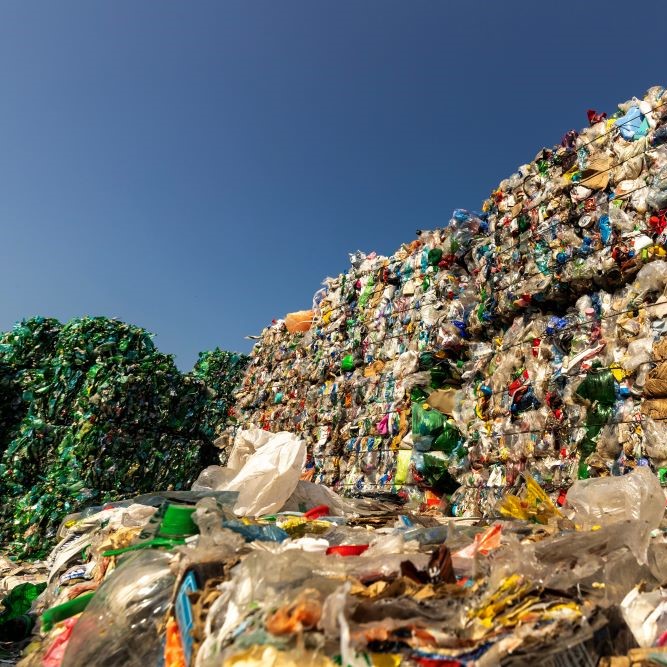
Every year, an estimated 130 million tonnes of plastic waste are unmanaged or improperly discarded, polluting soils, waterways and seas. While efforts continue to promote a circular economy and pursue a global plastics treaty, far less attention has focused on how plastic pollution affects biodiversity and the ecosystem services that underpin economies and human well-being. This report addresses that gap.
Plastic pollution has particularly severe impacts on sectors such as fisheries, agriculture and tourism, which directly depend on healthy natural systems. These impacts demonstrate that biodiversity loss and plastic pollution are not just environmental challenges, but economic and resilience challenges too. More than half of global GDP is moderately or highly dependent on nature. So degraded ecosystems create growing risks for communities, industries and economies at a time when they are already under pressure from climate change and geopolitical uncertainty.
This report draws on field assessments conducted across nine geographies on three continents, which together represent one of the most detailed multi-country evidence bases on plastic pollution and biodiversity to date. It concludes with recommendations for governments, corporates, investors and communities to translate this evidence into coordinated action to deliver measurable benefits for nature, people and economies.
Click here to download and read the full report.