Africa / UAE
UAE-Africa Trade Tops USD 158 Billion in 2025
UAE Africa trade has crossed USD 158 billion, signalling a structural shift as Dubai tightens its grip on African ports, trade agreements and greenfield investment.
The numbers are striking. UAE–Africa non-oil trade reached USD 158 billion in 2025, up 41.6% from 2024. Africa’s share of the UAE’s total non-oil trade rose to 15.5%, from 10.8% in 2019. That climb took just six years.
The broader context is equally significant. UAE government data show the country’s total non-oil foreign trade hit AED 3.8 trillion (approx. USD 1.03 trillion) in 2025 — growth of more than 26% on the prior year. Africa is now a meaningful slice of that total, not a footnote.
Meanwhile, Financial Times fDi Markets data show UAE-based entities have announced more than USD 168 billion in greenfield projects across Africa since 2017. Those projects span energy, technology, infrastructure, logistics and mining. Much of the capital has yet to be deployed, but the pipeline is deep, and the intent is clear.
Source: Further Africa
Africa
Intra-African Trade Fair Records Nearly USD 50 Billion in Deals
The fourth Intra-African Trade Fair, held recently in Algiers, generated nearly USD 50 billion in signed trade and investment agreements, according to Kanayo Awani, Executive Vice President of the African Export-Import Bank (Afreximbank).
Writing on the bank’s official website, Awani said the Algiers edition set a record for the value of agreements signed and strengthened the fair’s role as a platform for trade, investment and economic integration across Africa.
Held under the theme “Gateway to New Opportunities,” the event brought together a larger number of participants and generated a higher volume of agreements and transactions, Awani said. She described it as a platform for businesses to access new markets and establish partnerships.
Across its first four editions, the fair has attracted more than 180,000 participants and 6,600 exhibitors from 132 countries, while the cumulative value of trade and investment agreements has exceeded USD 167 billion, according to Afreximbank.
The bank said about 360,000 small and medium-sized enterprises have benefited from the fair, including businesses led by women and young people. It estimates that investment associated with the event generates about 42 jobs for every USD 1 million invested, implying more than 500,000 direct jobs across the continent for each edition.
Source: Dzair Tube
Angola
TotalEnergies Angola backs a USD 10 Billion Upstream Push
TotalEnergies Angola is accelerating near-term output and broadening its exploration base after the Acacia-5 oil discovery on Block 17 and new acreage awards in the Lower Congo Basin.
TotalEnergies confirmed the Acacia-5 discovery on Block 17 offshore Angola in June 2026. The company holds a 38% operated interest alongside Equinor, ExxonMobil, Azule Energy and Sonangol E&P. First oil is targeted for September 2026, just three months after drilling.
The field ties back to the existing Pazflor floating production, storage and offloading unit. That decision keeps capital intensity low. Company guidance points to roughly 6,000 additional barrels of oil per day added to Block 17 output. Because it plugs into sunk infrastructure, payback should be rapid.
Block 17 already hosts multiple FPSOs. Acacia-5 is a near-field tie-back, not a greenfield project. As one analyst noted: Acacia-5 shows how TotalEnergies Angola turns small, quick discoveries into cash-generating barrels rather than long-dated options.
This is also the company’s second exploration success in Angola this year. Earlier, TotalEnergies recorded an oil and gas condensate find in Block 0 in the Lower Congo Basin, where it holds a 10% interest. Chevron’s Cabinda Gulf Oil Company operates that block alongside Sonangol E&P and Azule Energy. The Block 0 discovery remains under technical and economic assessment. However, it reinforces the basin’s prospectivity and diversifies TotalEnergies’ exposure beyond its core operated hubs.
Source: Further Africa
Egypt
Egypt’s Offshoring Sector Generates USD 5.2 Billion as AI and Digital Services Drive Growth
Egypt’s technology and business services offshoring sector is increasingly becoming a central pillar of the country’s economic growth strategy, driving foreign direct investment, high-value service exports and skilled employment.
Supported by policy frameworks from the Ministry of Communications and Information Technology and the Information Technology Industry Development Agency, Egypt generated USD 5.2 billion in offshoring services exports in 2025. The strategy is focused on expanding the sector beyond traditional back-office operations into specialised digital services that incorporate Generative AI into service delivery.
Egypt’s offshoring ecosystem currently comprises 252 companies operating across 282 global delivery centres, including 177 multinational firms employing more than 195,000 specialists. Global enterprises are expanding their presence in the country to take advantage of its large talent pool, AI capabilities, multilingual workforce, digital infrastructure and operational resilience across multiple delivery hubs.
The sector’s growth was highlighted during an official tour of technology and business services companies in Alexandria led by Egypt’s Prime Minister, H.E. Dr. Mostafa Madbouly, alongside other senior government officials.
Alexandria has emerged as an important technology hub outside Cairo, supported by a large pool of university graduates and technology professionals. The city has become a strategic location for information technology, enterprise software support, AI-enabled customer experience and business services.
Source: Tech Africa
Libya
Austrian Energy Firm Discovers New Oil Well up to 45 Million Barrels of Oil in Libya
An Austrian energy company, OMV has made a commercially viable oil discovery in the North African nation of Libya following detailed technical and economic evaluations.
The discovery took place at the Essar well located within Libya’s Sirte Basin. OMV operates the site and holds a 12% stake in the C103 concession area.
It was announced that Zueitina Oil Company will take responsibility for developing the reservoir.
Because the well sits close to established production and processing facilities, Libya Observer noted that energy officials expect a faster rollout at a lower cost.
This new discovery adds to the already immense petroleum wealth located in North Africa.
Libya continues to stand out as the leading energy powerhouse on the continent, possessing some of the largest crude deposits anywhere in the world.
Source: Business Insider Africa
Nigeria / Uganda
Nigerian Investors Signal USD 3.8 Billion in Planned Uganda Projects
Uganda has attracted expressions of investment interest valued at about USD 3.8 billion from Nigerian companies, according to the Uganda Investment Authority. The prospective projects span cement, manufacturing, fertiliser and livestock, sectors that are central to Uganda’s effort to expand industrial production, strengthen regional trade and create more skilled jobs.
The figure is significant, but it should be understood as a pipeline of proposed investment rather than money already spent. Investment expressions normally move through several stages, including company registration, licensing, land identification, environmental review, financing and construction. The quality of follow-through will therefore matter as much as the headline value.
One of the authority’s largest proposals is a USD 800 million fertiliser plant. If developed to commercial scale, such a facility could address a persistent constraint in Ugandan agriculture: the limited and costly use of modern farm inputs.
Uganda and Nigeria are two of Africa’s most populous and commercially active countries, but direct investment and trade between them have room to grow. Nigerian businesses have experience in finance, consumer goods, construction materials, agribusiness, telecommunications and entertainment. Uganda offers access to a young market and a wider East African and continental customer base.
If the proposals mature, they could deepen African cross-border investment and provide new capacity in strategically important sectors. The next phase will determine whether the USD 3.8 billion expression of interest becomes factories, supply contracts and sustainable employment.
Source: Nile Journal
Tanzania
Tanzania puts USD 30.1 Billion Investment Pipeline on the Table for European Capital
Tanzania is taking an aggressive approach to attracting European capital, putting forward a pipeline of 68 investment projects valued at USD 30.1 billion.
Of the total pipeline, about USD 29.1 billion remains available for investment, with the government and European Union preparing investment roadshows in Finland, Italy and the Netherlands between September 28 and October 6.
The campaign targets more than 300 European investors and is designed to connect Tanzanian businesses and government agencies with companies, financiers, and institutional investors.
The opportunity spans some of the sectors expected to shape Tanzania’s next phase of economic growth.
Agriculture and agribusiness, critical minerals and digital innovation are among the main investment themes, while renewable energy and transport and logistics are being positioned as enabling sectors.
The strategy reflects Tanzania’s attempt to move beyond traditional foreign aid and commodity exports towards larger volumes of private investment and value addition.
Source: African Business Leadership Magazine
____________________________
Reports
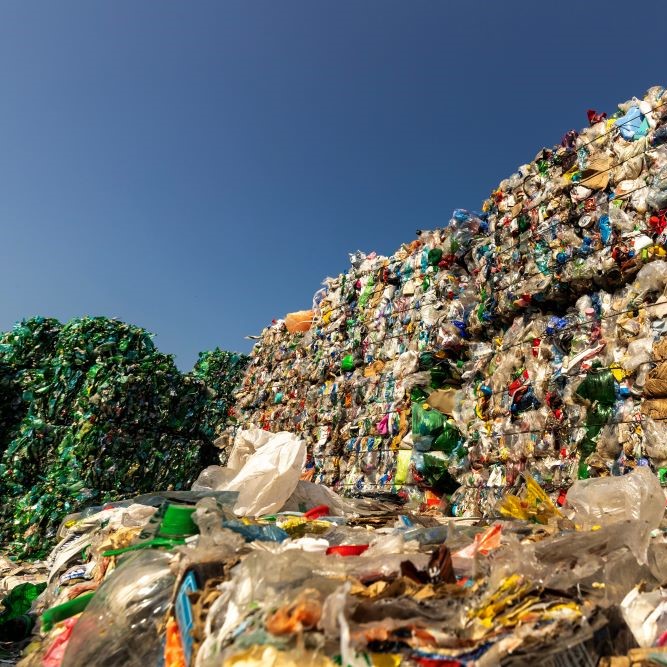
What a Waste 3.0: Global Snapshot of Solid Waste Management Toward Circularity until 2050 | World Bank
What a Waste 3.0 is the third edition of the World Bank Group’s What a Waste series, following the 2012 and 2018 publications. It updates and expands these earlier publications and provides a global reference dataset on municipal solid waste in the context of a transition toward circularity, drawing on the most recent publicly accessible data from 217 countries and economies and 262 cities.
This edition consolidates data on waste generation, composition, collection, treatment, and disposal, and presents trends by region and income group. It also includes information on legislation, institutional arrangements, plastics management, private sector participation, employment, environmental impacts, and the costs and financing of municipal waste services.
Click here to download and read the full report.
Unlocking Battery Storage Potential for Sustainable Mini-Grid Electrification in West Africa | International Renewable Energy Agency
West Africa has the second-largest number of people without access to electricity in Sub-Saharan Africa, with about 33% of its 565 million people lacking access in 2023, mainly in rural and remote areas where grid expansion is not economically viable. Decentralised renewable energy mini-grids offer an increasingly attractive solution, with battery storage helping balance supply and demand when renewable resources are limited. Closing this gap supports Mission 300, which aims to connect 300 million Africans to electricity by 2030.
Based on IRENA’s SEAPS framework, the report assesses solar PV mini-grids with battery storage in Burkina Faso, Mali, Nigeria and Senegal. Using geospatial modelling and mini-grid optimisation, it evaluates different demand, grid-expansion and cost scenarios.
The analysis identifies a near-term market of 568 MW and finds storage delivers greatest value where grid expansion is constrained and demand is high, reaching nearly USD 25 billion and 130 GWh of batteries. It also highlights storage as protection against fuel-price shocks and recommends integrated planning, stronger institutions, enabling policies and innovative finance.
Click here to download and read the full report.
Digital Public Infrastructure in Africa: A Leapfrog Catalyst for Inclusive Growth| United Nations Development Programme
Across Africa, governments are facing increasing pressure to deliver better services with fewer resources as development assistance declines and debt challenges persist. At the same time, rapid advances in digital technologies and artificial intelligence are transforming governance, trade, and economic competitiveness.
This policy paper explores how Digital Public Infrastructure (DPI) can support inclusive development, improve service delivery, and expand economic opportunities. Drawing on evidence and country examples, it outlines key safeguards and practical pathways for implementing DPI as a foundational enabler and catalyst for sustainable growth and prosperity.
Click here to read and download the full report.
Making Financial Markets Work for Africa – Building the Markets that move Capital to where It’s Needed| FSD Africa
If readers flick through this publication, they will find one word running through everything FSD Africa does: transformation. FSD Africa is focused on disrupting how financial markets operate. If that is not evident in what follows, it would not have achieved its objective. FSD Africa’s Financial Markets team exists to make capital markets work for Africa, both for its present and its future. It supports the financing of priorities that are becoming increasingly urgent across the continent.
Africa has a very youthful population. The continent needs to create more than 25 million jobs every year, and that number continues to rise. FSD Africa seeks to help turn what could become a demographic time bomb into a demographic dividend. Much of Africa’s infrastructure is also relatively underdeveloped, creating an urgent need to catch up by building roads, investing in energy, and improving access to education and healthcare.